Career Outcomes
Where a Ruth Prowse diploma can take you, from your first role to a lifelong practice.
Graduates since 1971
Accredited NQF Level 6 diplomas
33 career paths mapped
Alumni · Career outcomes
Where Ruth Prowse takes you
A Ruth Prowse diploma does not lead to one job title. Our graduates exhibit, design, make, teach and start their own studios, and many move between these as their careers grow. Here is where each diploma can lead, the work graduates are making now, and how three years in the studios prepare you for working life.
Career pathways
Where each diploma leads
- Entry
- Open to new graduates
- Mid-career
- Several years in
- Senior
- A long track record
- Further study
- Needs an extra qualification
Diploma in Fine Art
Studio practice
-
Studio artist Entry
Independent practice, exhibitions, gallery representation
-
Studio assistant Entry
Working in an established artist's studio
-
Illustrator Entry
Editorial, publishing, books
-
Public artist or muralist Mid-career
Murals and public commissions
Galleries, museums and education
-
Gallery assistant Entry
Exhibitions, sales, artist liaison
-
Art educator Entry
Schools, colleges, community arts
-
Gallery manager Mid-career
Commercial and public galleries
-
Curator Senior
Exhibitions, collections, research
Creative industry crossover
-
Set and props maker Entry
Film, theatre, television
-
Production designer Senior
The look of a film, stage or television production
-
Art therapist Further study
Healthcare, community wellbeing
-
Conservator Further study
Caring for and restoring artworks and collections
Diploma in Graphics Design
Brand and identity
-
Brand designer
Identity systems, visual language
-
Art director
Agency, in-house, advertising
-
Creative director
Senior leadership, creative vision
Digital and UX
-
UX/UI designer
Apps, platforms, user research
-
Web designer
Digital interfaces, front end
-
Product designer
Digital products, prototyping
Motion and screen
-
Motion graphics designer
Titles, explainers, brand animation
-
Content creator
Social media, short-form video
Publishing and print
-
Editorial designer
Magazines, layouts, typography
-
Packaging designer
Retail, publishing, FMCG
-
Typographer
Custom typefaces, lettering
Diploma in Jewellery Design
Design and making
-
Jewellery designer
Bespoke collections, commissions
-
Goldsmith and bench jeweller
Master craftsperson, restoration
-
Stone setter
Precious stones, channel and pavé setting
-
Wax carver and model maker
Prototyping, lost-wax casting
Valuation and specialist
-
Gemologist
Valuation, sourcing, GIA certification
-
Jewellery valuer
Insurance, estate, resale
-
Auction house specialist
Cataloguing, authentication
Industry and enterprise
-
CAD and technical designer
3D modelling, manufacturing specs
-
Label founder
Own brand, markets, e-commerce
-
Educator and facilitator
Workshops, craft schools, colleges
From the studios
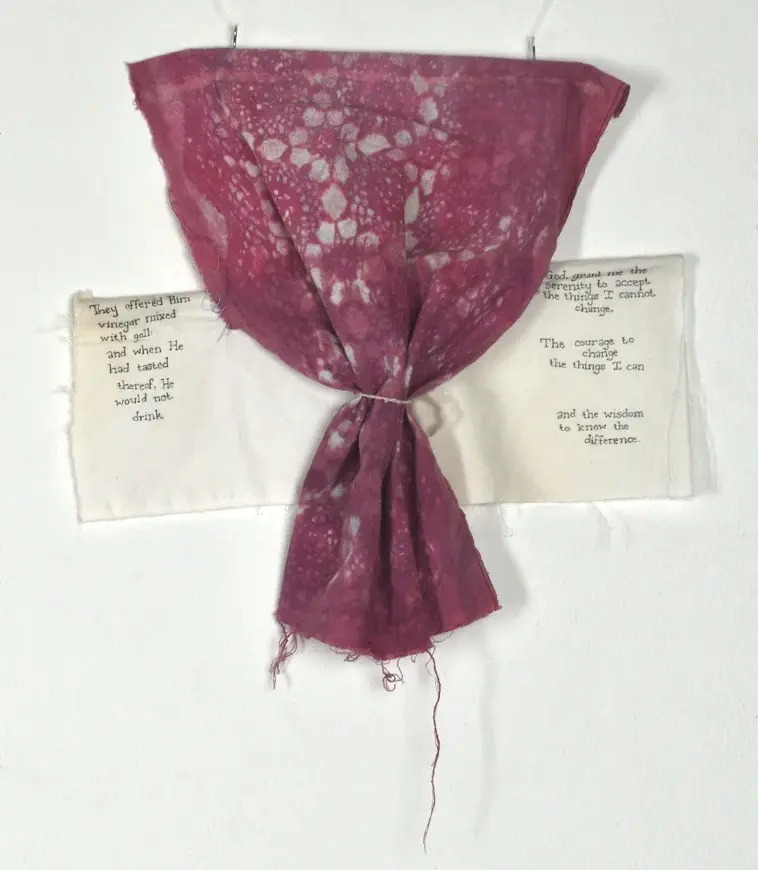
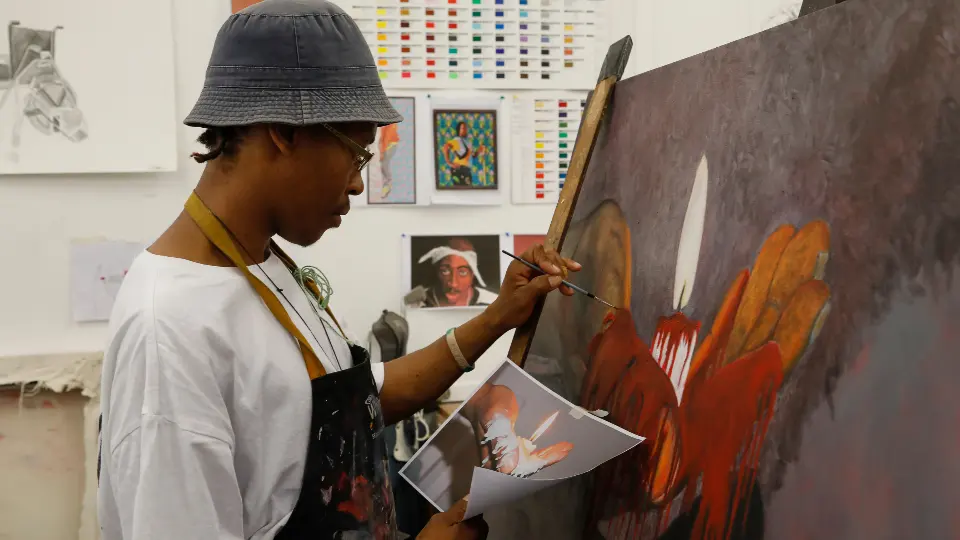
Work from recent graduates
Every graduate leaves with a body of work and a portfolio to show galleries, clients and employers. Here is a recent one from each studio.
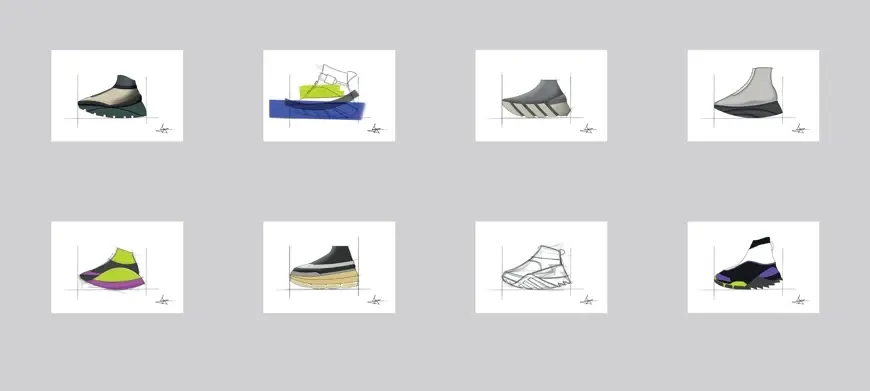
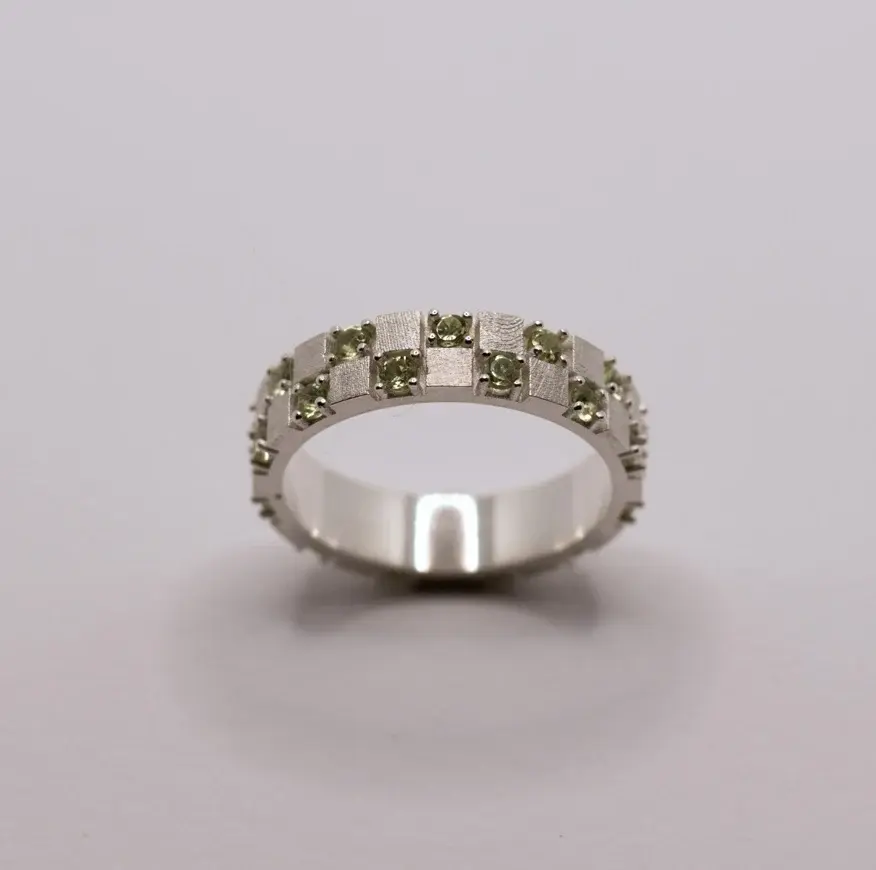
- Training working artists, designers and jewellers
- Since 1971
- Accredited NQF Level 6 diplomas
- 3
- Graduate portfolios online
- 120
- Students per studio
- Under 15
Ready for working life
How the diploma prepares you
-
A professional body of work
Third year centres on your own sustained work in your major, a professional portfolio you curate for galleries, clients or employers, and an extended essay that teaches you to research and write about what you make.
-
Professional practice and business
Professional Practice runs through second and third year of every diploma, alongside entrepreneurial skills in Fine Art and Graphic Design and business management in Jewellery Design, so you can work for yourself or for others.
-
Industry-standard tools
You train on the tools the industry uses: Photoshop, Illustrator and InDesign in Graphic Design, Rhino 3D CAD/CAM in Jewellery Design, and photography across all three diplomas.
-
Taught by working artists
Every lecturer is a practising artist, designer or jeweller, and studios have fewer than 15 students, so your work gets close, individual critique from people working in the field.
See the modules year by year: Fine Art curriculum Graphic Design curriculum Jewellery Design curriculum
Questions
Careers questions, answered
The questions students, parents and career-changers ask most about work after art school.
All FAQs
Will I actually be able to make a living from this?
RPSA graduates work in design, fashion, luxury goods, technology, education, and fine art. The question is not whether creative careers exist; it is whether you will be equipped to pursue them. An RPSA diploma builds a creative foundation that is broad enough to carry you across industries and adaptable enough to evolve as those industries change. Graduates work as brand designers, art directors, jewellers, illustrators, gallery curators, production designers, and educators, among many other roles.
Next step: Explore the career pathways section below, or ask admissions to connect you with a graduate working in a field you are interested in.
Is a diploma worth as much as a degree?
RPSA chose the diploma model deliberately. Three years of studio intensive, practice led education produces graduates who can make, think, and work professionally from the day they leave. The diploma is registered at NQF Level 6 and accredited by SAQA. It is a recognised qualification with over fifty years of graduates working across industries. The question is not whether the qualification looks the same on paper. It is whether the person holding it can do the work. RPSA’s track record answers that clearly.
Next step: See the student work. Meet the lecturers. Decide for yourself.
Will a diploma-level qualification carry enough weight when I re-enter the job market?
An RPSA diploma is a professional creative credential backed by real career outcomes. The qualification is registered at NQF Level 6 and accredited by SAQA. For someone already carrying professional experience, adding a creative qualification creates a combination that most candidates in the job market simply do not have. Employers in creative industries hire on the strength of the portfolio and the person, not on the type of qualification alone.
Next step: Ask for examples of RPSA graduates working in the specific field or industry you are moving into.
Will AI make creative skills obsolete before I even finish studying?
AI is changing the creative industry. It is not replacing the people who understand creativity at its deepest level. RPSA trains you to think conceptually, work with your hands, and make judgements that require human understanding. These are the skills that become more valuable as automation handles the routine work. The curriculum engages with the tools and the questions AI raises, not by ignoring them and not by treating them as a threat, but by developing creative practitioners who can use them with intent.
Next step: Ask a lecturer how the curriculum engages with where the industry is heading. The answer will be more specific and more grounded than anything you will read online.
How do I position myself in the job market with both a creative qualification and prior career experience?
Most people in the job market have either creative training or professional experience. You will have both. That combination is rare, and it is exactly what many employers in creative and hybrid roles are looking for. RPSA’s professional practice modules in years two and three are designed to help you articulate and position that combination.
Next step: Ask admissions how RPSA graduates with prior careers have positioned themselves, or ask to see career pivot examples from recent cohorts.

Talk to a graduate
Hear it from someone who did it
Ask admissions to put you in touch with a graduate of the diploma you are considering, come and see the studios, or start your application.