Emma Minkley
Lecturer

Accreditation: Three-Year Diploma | NQF Level 6 | 360 Credits | SAQA ID: 49863
The Diploma in Graphic Design at Ruth Prowse School of Art builds designers who can think clearly and make well. From your first project brief, you learn to work to deadlines, develop concepts under pressure, and produce finished, professional-standard design work, because that is what the industry demands. Communication design, illustration, desktop publishing and print media are woven together from year one, balanced with the design theory that sharpens why you make the choices you do. We are looking for visual thinkers ready to turn ideas into work that holds its own in a professional context.
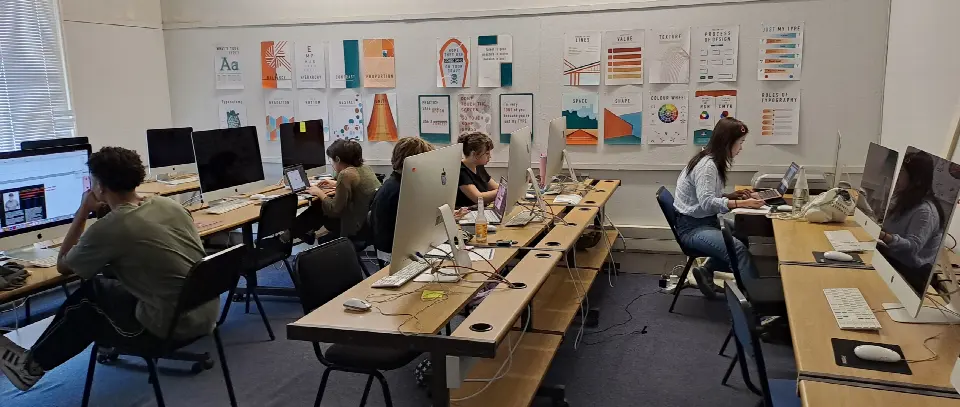
Your first year gives you a broad foundation across communication design, illustration, drawing, printmaking and photography, and desktop publishing using Photoshop, Illustrator and InDesign, run alongside visual discourse. In your second year, you build a communication design major, supported by illustration as a second major, and go deeper into DTP, digital photography and design discourse. Studio classes stay small, so you get individualised attention as your work sharpens. You learn through project briefs, critique, demonstrations and studio practice, guided by mentors who are practising designers working in the industry today.
The curriculum moves from a broad first-year foundation across the design disciplines into focused specialisation. From year two, a communication design major runs alongside a second major in illustration, sharpening both your conceptual thinking and your technical execution. Your third year is spent building an independent, professional body of design work, supported by an extended research essay.
To qualify for the undergraduate diploma, you must successfully complete a total of 360 credits broken down over three years of contact learning:
| Module | Credits | NQF |
|---|---|---|
| Foundation Communication Design | 42 | 5 |
| Foundation Desktop Publishing (DTP) | 18 | 5 |
| Foundation Drawing & Illustration | 18 | 5 |
| Foundation Printmaking & Photography | 24 | 5 |
| Visual Discourse | 18 | 5 |
| Module | Credits | NQF |
|---|---|---|
| Specialisation Communication Design Major | 60 | 6 |
| Specialisation Illustration (Second Major) | 24 | 6 |
| Specialisation DTP & Digital Photography | 12 | 6 |
| Design Discourse | 18 | 7 |
| Specialisation Professional Practice | 6 | 6 |
| Module | Credits | NQF |
|---|---|---|
| Professional Body of Work Illustration Major | 6 | 6 |
| Professional Body of Work Communication Design Major | 63 | 6 |
| Professional Body of Work Professional Portfolio & DTP | 9 | 6 |
| Professional Body of Work Extended Essay | 30 | 7 |
| Professional Body of Work Professional Practice | 12 | 7 |
Taught by practising designers
Lecturer
Lecturer
Lecturer
As a non-profit public benefit organisation, Ruth Prowse School of Art sets highly competitive tuition fees to actively facilitate access and address past educational imbalances. While the school supplies substantive materials and consumables for daily operations, students should budget independently for their personal creative production. Crucially, all creative work produced throughout the course belongs entirely to the student.
| Fees | Current fee |
|---|---|
| Application Fee | R0There are no application fees |
| Registration Fee | R12,000Non-refundable; required to secure placement upon acceptance and included in the total annual tuition fee. |
| Tuition Fees | First Year GD Fees are R85,290. Second and Third Year GD Fees are R83,696. These include the Registration Fee. Please note that a 10% administration levy applies to international students from non-SADC countries. |
Our fees are designed to stay transparent, competitive and accessible for students from diverse backgrounds. Settle early for a discount, pay by the standard deadline, or apply for a monthly instalment plan.
An extensive, need-based scholarship programme is available to provide full, substantive, or partial tuition support to deserving talent from previously disadvantaged communities. Funding may also be sourced to assist with creative materials and transport costs. Continued renewal of financial aid relies on maintaining a class attendance record of at least 80% and an academic average above 65%.
Fees & funding FAQsKickstart your creative career without upfront costs. Submit your application digitally or connect directly with our admissions team on WhatsApp.
Joining the Ruth Prowse School of Art community begins with showcasing your unique creative potential and meeting our foundational academic benchmarks. Because we maintain small class sizes to ensure highly individualised attention, the school accepts a strictly limited number of students each academic year. To give your application the best chance of success, make sure to submit your original practical portfolio, written essay, and supporting academic documents well ahead of key dates to secure your place.
Not ready for three years?
 Graphic Design
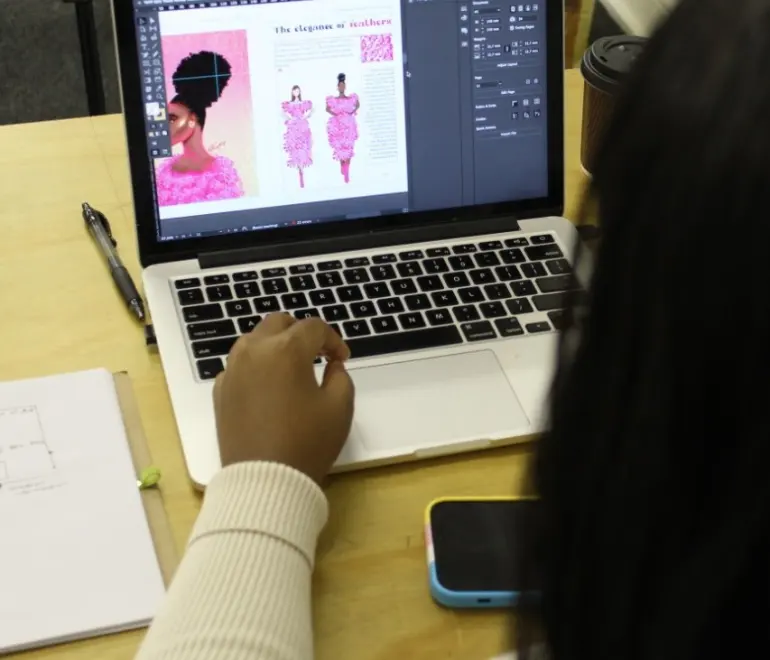
By the end of the session, students will digitise their chosen concept, transforming a sketch into a functional, versatile logo.
New dates coming soon
R660
View course