Frequently Asked Questions
The real questions students, parents and teachers actually ask, answered directly.
For School-Leavers
I did not do art at school. Does that rule me out?
No. You do not need Matric Art to apply to any of the three RPSA programmes. Creativity is developed here through guidance, mentorship, and hands on practice. The curriculum is designed to meet you where you are. Many of our strongest graduates had no formal art background when they started.
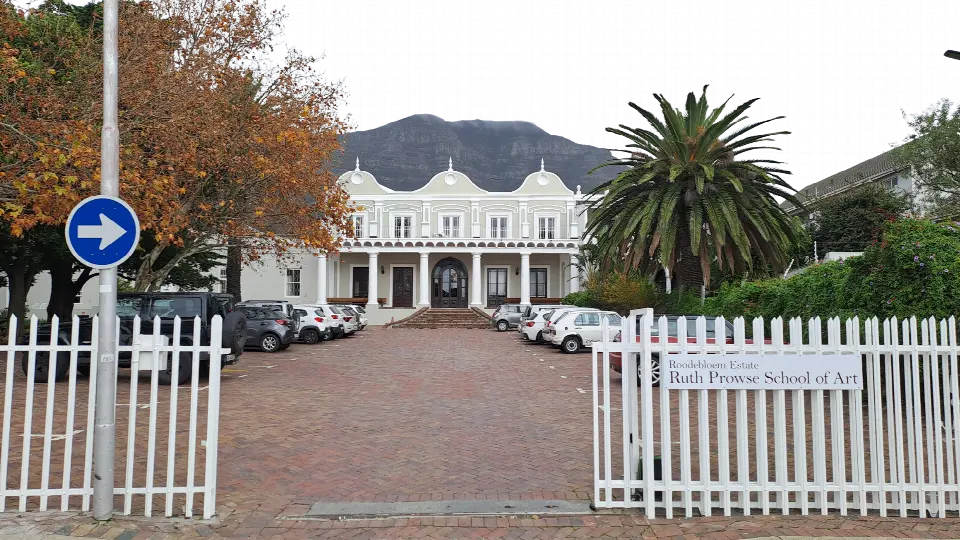
Next step: Book a campus visit and meet current students. You will get a better sense of fit in one hour than in any amount of online research.
Will I fit in here? My background is not typical for an art school.
RPSA’s smaller classes and personal culture create a genuine sense of belonging. The student body includes people from different cities, different financial backgrounds, and different starting points. Most students who feared they would not fit in changed their minds the moment they visited. The environment is welcoming because it is small enough to be personal.
Next step: Come see the campus. Talk to a lecturer. You will know when you get here.
I cannot afford the fees. Is there any point applying?
Yes. RPSA’s Financial Assistance Programme exists because the school invests in creative potential, not just in students who can pay full fees. Support ranges from partial to full tuition, and in some cases includes a materials stipend and transport support. The school does not receive government funding; bursaries are funded by donors who believe in what RPSA produces. If you have the potential, the financial question should not be the thing that stops you from applying.
Next step: Contact admissions for a full breakdown of tuition, materials, living costs, and funding options. No obligation.
I do not have a portfolio. Can I still apply?
You do not need a ready made portfolio to apply. Each application form includes a specific brief you can use to build a portfolio from scratch: prompts for drawings, objects, and designs that give you a clear starting point without needing formal training. Work from life where you can. Do not discard your mistakes; work that shows process, including attempts that did not land, tells us more about you than a single polished piece.
Next step: Download the RPSA portfolio starter brief with your application form, or check ruthprowse.co.za for the next Build a Portfolio short course dates.
Is a diploma worth as much as a degree?
RPSA chose the diploma model deliberately. Three years of studio intensive, practice led education produces graduates who can make, think, and work professionally from the day they leave. The diploma is registered at NQF Level 6 and accredited by SAQA. It is a recognised qualification with over fifty years of graduates working across industries. The question is not whether the qualification looks the same on paper. It is whether the person holding it can do the work. RPSA’s track record answers that clearly.
Next step: See the student work. Meet the lecturers. Decide for yourself.
Will a three-year diploma be rigorous enough?
RPSA does not teach to an average. Small classes mean lecturers work with every student individually. The programme is intensive: studio based, deadline driven, and structured so that each year builds on the last. If you want to be challenged, you will be. If you want to coast, you will not be able to. That is the point.
Next step: Visit campus and meet a lecturer. Ask about advanced project opportunities, external competitions, and what the final year exhibition demands.
Will I actually be able to make a living from this?
RPSA graduates work in design, fashion, luxury goods, technology, education, and fine art. The question is not whether creative careers exist; it is whether you will be equipped to pursue them. An RPSA diploma builds a creative foundation that is broad enough to carry you across industries and adaptable enough to evolve as those industries change. Graduates work as brand designers, art directors, jewellers, illustrators, gallery curators, production designers, and educators, among many other roles.
Next step: Explore the career pathways section below, or ask admissions to connect you with a graduate working in a field you are interested in.
Will AI make creative skills obsolete before I even finish studying?
AI is changing the creative industry. It is not replacing the people who understand creativity at its deepest level. RPSA trains you to think conceptually, work with your hands, and make judgements that require human understanding. These are the skills that become more valuable as automation handles the routine work. The curriculum engages with the tools and the questions AI raises, not by ignoring them and not by treating them as a threat, but by developing creative practitioners who can use them with intent.
Next step: Ask a lecturer how the curriculum engages with where the industry is heading. The answer will be more specific and more grounded than anything you will read online.
How do I convince my family that this is a real choice?
You are probably not the first person in your family to have this conversation. You might be the first one who follows through. RPSA can help: by giving your family the information they need (fees, outcomes, accreditation, alumni careers) and, if it helps, by connecting them with a graduate or a parent who has been in their position. Sometimes the most powerful thing is not an argument; it is evidence.
Next step: Ask admissions to send the parent information pack, or to connect your family with an RPSA graduate who has been where you are.
For Mature & Career-Change Students
I am older than typical students. Will I feel out of place?
Mature students are not an exception at RPSA. They are part of what makes the studio work. The student body is diverse in age, background, and experience. Small classes mean relationships form quickly and meaningfully, regardless of age. The culture here is one of shared purpose, not shared demographics.
Next step: Ask admissions to connect you with a current mature student before applying. RPSA will make that connection for you.
I have had a non-linear path — gaps in study, career changes. Does that count against me?
Nonlinear paths are a common entry point at RPSA, not an exception. The school actively draws on the real world experience mature students bring. Admissions looks at creative potential and commitment, not at the straightness of your CV. Some of the strongest students here arrived with gaps, detours, and second thoughts. That is not a weakness. It is material.
Next step: Speak to admissions about how your background maps to entry. There is likely more flexibility than you expect.
I am still working. Can I realistically manage the programme alongside that?
The honest answer is that the programme is intensive. It is a full time, studio based course that requires significant time in the building and outside it. Some mature students manage part time work alongside their studies, but it takes careful planning. RPSA will give you a realistic picture of what the weekly time commitment looks like so you can make an informed decision.
Next step: Ask admissions for a realistic breakdown of weekly contact hours and self study expectations before applying.
I am coming from another industry. Will my previous career be relevant here?
The experience you bring from another industry is not baggage to set aside. It is material. It changes the questions you ask, the way you approach creative problems, and the perspective you bring to the studio. RPSA does not require you to start from zero. It builds on what you already know and adds the creative skills, technical discipline, and critical framework to take it somewhere new.
Next step: Ask to meet a lecturer before applying. The conversation will tell you more than any prospectus.
Will a diploma-level qualification carry enough weight when I re-enter the job market?
An RPSA diploma is a professional creative credential backed by real career outcomes. The qualification is registered at NQF Level 6 and accredited by SAQA. For someone already carrying professional experience, adding a creative qualification creates a combination that most candidates in the job market simply do not have. Employers in creative industries hire on the strength of the portfolio and the person, not on the type of qualification alone.
Next step: Ask for examples of RPSA graduates working in the specific field or industry you are moving into.
What if AI disrupts the industry before I finish?
You have probably already seen how technology is changing your current industry. RPSA will train you to be the person who knows what to do with creative tools, not the person who is replaced by them. The programme develops conceptual thinking, material knowledge, and the ability to make judgements that require human understanding. These are exactly the capabilities that hold their value as automation handles the routine work.
Next step: Ask a lecturer how the curriculum engages with AI directly. The answer will be more specific than anything you will read online.
The financial decision is bigger than just tuition fees.
Correct. The financial decision to study as an adult includes tuition, reduced income, materials, and living costs. RPSA will give you the numbers you actually need to plan properly: fees, funding options, what materials cost per discipline, and what part time work realistically looks like alongside the programme. No surprises.
Next step: Ask admissions for a full breakdown: fees, funding options, and what part time work realistically looks like alongside the programme.
My partner and family think I am being irresponsible.
Choosing to retrain takes more resolve than most people give it credit for. You do not need permission to make a considered decision about your own future, but you might need evidence to bring the people around you along. RPSA can help with that: real graduate outcomes, a clear financial picture, and if it would help, a conversation with someone who has made the same move.
Next step: Ask admissions to connect you with an RPSA graduate who changed careers later in life. One conversation will do more than any brochure.
Will the programme be pitched at school leavers and feel intellectually underwhelming?
If you are coming here expecting to be challenged, you are in the right place. RPSA is not a soft landing. Mature students consistently report that the programme pushed them harder than they expected. The lecturers work with you individually, which means the programme meets you at your level and raises the bar from there.
Next step: Ask to see the work produced by mature students currently in the programme. Then decide if this is the level you are looking for.
How do I position myself in the job market with both a creative qualification and prior career experience?
Most people in the job market have either creative training or professional experience. You will have both. That combination is rare, and it is exactly what many employers in creative and hybrid roles are looking for. RPSA’s professional practice modules in years two and three are designed to help you articulate and position that combination.
Next step: Ask admissions how RPSA graduates with prior careers have positioned themselves, or ask to see career pivot examples from recent cohorts.
Fees & Funding
What financial support is available?
Full bursaries are available covering tuition, materials, transport, and subsistence. RPSA does not receive NSFAS funding — the programme is funded entirely by private donors who share the school’s commitment to backing exceptional creative potential.
Who can apply?
Students regardless of demographic background or nationality, aged 18 to 24, studying full-time at RPSA.
How does it work?
Apply for financial assistance once you’ve submitted a full application for admission. Awards are reviewed annually and students reapply each year, based on creative and academic commitment alongside financial need.
How do I apply?
Application forms are available from admissions and online. Submit completed forms with supporting documents including proof of income and two written references. Next step: Contact admissions for closing dates.
What will materials and tools cost?
This varies by discipline. RPSA provides a full kit list once you’re accepted. Jewellery Design includes a specialist toolkit in year one costs; Graphic Design requires a laptop capable of running industry-standard design software; Fine Art requires painting, drawing, and printmaking materials that build up across the three years.
Career Pathways
What can I actually do with each diploma?
RPSA graduates do not follow a single career template. They move between disciplines, build businesses, and apply creative thinking in places you might not expect. Below is a detailed picture of where each diploma can take you.
Graphic Design
Brand and identity: Brand designer (identity systems, visual language); art director (agency, in house, advertising); creative director (senior leadership, creative vision).
Digital and UX: UX/UI designer (apps, platforms, user research); web designer (digital interfaces, front end); product designer (digital products, prototyping).
Motion and screen: Motion graphics designer (titles, explainers, brand animation); content creator (social media, short form video).
Publishing and print: Editorial designer (magazines, layouts, typography); packaging designer (retail, publishing, FMCG); typographer (custom typefaces, lettering).
Fine Art
Studio practice: Studio artist (independent practice, gallery representation); illustrator (editorial, publishing, books); photographer (fine art, documentary, editorial); printmaker (editions, artist books).
Collections and the art market: Gallery curator (commercial and public galleries); art consultant (private collections, acquisitions); art dealer (sourcing, selling, representation).
Curatorial and education: Educator (schools, colleges, community arts); museum curator (public institutions, research); arts administrator (foundations, cultural organisations).
Creative industry: Set and production designer (film, theatre, television); art therapist (healthcare, community wellbeing).
Jewellery Design
Design and making: Jewellery designer (bespoke collections, commissions); goldsmith and bench jeweller (master craftsperson, restoration); stone setter (precious stones, channel, pave); wax carver and model maker (prototyping, lost wax casting).
Valuation and specialist: Gemologist (valuation, sourcing, GIA certified); jewellery valuer (insurance, estate, resale); auction house specialist (cataloguing, authentication).
Industry and enterprise: CAD and technical designer (3D modelling, manufacturing specs); label founder (own brand, markets, e commerce); educator and facilitator (workshops, craft schools, colleges).
Admissions & Accreditation
Is RPSA properly accredited?
Yes. RPSA is registered and accredited, with diplomas at NQF Level 6 — the same level as the first three years of a university degree. The school has over fifty years of graduate outcomes.
What are the entry requirements?
A National Certificate (Vocational) Level 4 or Grade 12 certificate, with at least 40% in three fundamental subjects including English, and at least 50% in three compulsory vocational subjects. Matric Art is not required for any programme. Interim results are accepted if you haven’t finished Grade 12 yet.
How do I apply?
Six steps, no application fee: choose your discipline, check entry requirements, prepare your portfolio (5 to 8 original works), gather supporting documents, submit your application, then RPSA reviews your portfolio and may arrange a short call or meeting. Applications are processed from 1 June each year.
Still have a question?
Book a campus visit or talk to admissions. You'll get a better sense of fit in one hour than in any amount of online research.